
I bring you a weekly bite-sized chunk of the science behind helicopter human factors and CRM in practice, simplifying the complex and distilling a helicopter related study into a summary of less than 500 words. This week: Organizational pressure and pilot decision-making in adverse weather: A naturalistic decision-making analysis of helicopter accidents.
Category Archives: Helicopters
H2F BITESIZE #42
I bring you a weekly bite-sized chunk of the science behind helicopter human factors and CRM in practice, simplifying the complex and distilling a helicopter related study into a summary of less than 500 words. This week: Effects of unexpected event urgency and flight scenario familiarity on pilot trainees’ performance and stress responses.
H2F BITESIZE #41
I bring you a weekly bite-sized chunk of the science behind helicopter human factors and CRM in practice, simplifying the complex and distilling a helicopter related study into a summary of less than 500 words. This week: Integrating digital competency into aviation training: an auditable Inputs–Processes–Outcomes framework
H2F BITESIZE #40
I bring you a weekly bite-sized chunk of the science behind helicopter human factors and CRM in practice, simplifying the complex and distilling a helicopter related study into a summary of less than 500 words. This week: Machine learning methods for cognitive load analysis and classification in aviation.
H2F BITESIZE #39
I bring you a weekly bite-sized chunk of the science behind helicopter human factors and CRM in practice, simplifying the complex and distilling a helicopter related study into a summary of less than 500 words. This week: Non-technical skills in the civil aviation sector.
H2F BITESIZE #38
I bring you a weekly bite-sized chunk of the science behind helicopter human factors and CRM in practice, simplifying the complex and distilling a helicopter related study into a summary of less than 500 words. This week: The first fatal Helicopter Emergency Medical Services crash in Turkey: Weather, human factors, and lessons learned.
H2F BITESIZE #37
I bring you a weekly bite-sized chunk of the science behind helicopter human factors and CRM in practice, simplifying the complex and distilling a helicopter related study into a summary of less than 500 words. This week: Wellbeing of Helicopter Emergency Medical Services Personnel in a Challenging Work Context: A Qualitative Study
H2F BITESIZE #36
I bring you a weekly bite-sized chunk of the science behind helicopter human factors and CRM in practice, simplifying the complex and distilling a helicopter related study into a summary of less than 500 words. This week: Effectiveness of a new basic course incorporating a medical trainer simulator for HEMS education in Japan: A pre–post intervention study.
H2F BITESIZE #35
I bring you a weekly bite-sized chunk of the science behind helicopter human factors and CRM in practice, simplifying the complex and distilling a helicopter related study into a summary of less than 500 words. This week: Using SHERPA to predict human error on the maritime SAR helicopter hoist task.
H2F BITESIZE #33
I bring you a weekly bite-sized chunk of the science behind helicopter human factors and CRM in practice, simplifying the complex and distilling a helicopter related study into a summary of less than 500 words. This week: The potential of flight simulation to support pilot training for mountain helicopter emergency medical services.
H2F BITESIZE #32
I bring you a weekly bite-sized chunk of the science behind helicopter human factors and CRM in practice, simplifying the complex and distilling a helicopter related study into a summary of less than 500 words. This week: Quantifying the impact of spatial disorientation on pilot mental workload and attentional focus.
H2F BITESIZE #31
I bring you a weekly bite-sized chunk of the science behind helicopter human factors and CRM in practice, simplifying the complex and distilling a helicopter related study into a summary of less than 500 words. This week: Helicopter pilots encountering fog: an analysis of 109 accidents from 1992 to 2016.
H2F BITESIZE #30
I bring you a weekly bite-sized chunk of the science behind helicopter human factors and CRM in practice, simplifying the complex and distilling a helicopter related study into a summary of less than 500 words. This week: Incidence and challenges of helicopter emergency medical service (HEMS) rescue missions with helicopter hoist operations: analysis of 11,228 daytime and nighttime missions in Switzerland.
H2F BITESIZE #29
I bring you a weekly bite-sized chunk of the science behind helicopter human factors and CRM in practice, simplifying the complex and distilling a helicopter related study into a summary of less than 500 words. This week: Effects of acute stress on aircrew performance: Literature review and analysis of operational aspects´
H2F BITESIZE #28
I bring you a weekly bite-sized chunk of the science behind helicopter human factors and CRM in practice, simplifying the complex and distilling a helicopter related study into a summary of less than 500 words. This week: Workload in helicopter rescue operations – A comparison of two different rescue methods in a randomised cross-over design.
H2F BITESIZE #27
I bring you a weekly bite-sized chunk of the science behind helicopter human factors and CRM in practice, simplifying the complex and distilling a helicopter related study into a summary of less than 500 words. This week: Crew Resource Management: What aviation can learn from the application of CRM in other domains
H2F BITESIZE #26
I bring you a weekly bite-sized chunk of the science behind helicopter human factors and CRM in practice, simplifying the complex and distilling a helicopter related study into a summary of less than 500 words. This week: Pilot see, pilot do: Examining the predictors of pilots’ risk management behaviour
H2F BITESIZE #25
I bring you a weekly bite-sized chunk of the science behind helicopter human factors and CRM in practice, simplifying the complex and distilling a helicopter related study into a summary of less than 500 words. This week: Emotions-based training: Enhancing aviation performance through self-awareness and mental preparation, coping with stress and emotions.
H2F BITESIZE #24
I bring you a weekly bite-sized chunk of the science behind helicopter human factors and CRM in practice, simplifying the complex and distilling a helicopter related study into a summary of less than 500 words. This week: Hero or Hazard: A systematic review of individual differences linked with reduced accident involvement and influencing success during emergencies.
H2F BITESIZE #23
I bring you a weekly bite-sized chunk of the science behind helicopter human factors and CRM in practice, simplifying the complex and distilling a helicopter related study into a summary of less than 500 words. This week: Exploring the role of pilot attributes and skills in response to in-flight emergencies.
H2F BITESIZE #22
I bring you a weekly bite-sized chunk of the science behind helicopter human factors and CRM in practice, simplifying the complex and distilling a helicopter related study into a summary of less than 500 words. This week: The Virtual Landing Pad: Facilitating rotary-wing landing operations in Degraded Visual Environments (DVE).
H2F BITESIZE #21
I bring you a weekly bite-sized chunk of the science behind helicopter human factors and CRM in practice, simplifying the complex and distilling a helicopter related study into a summary of less than 500 words. This week: Safety in high-risk helicopter operations: The role of additional crew in accident prevention.
H2F BITESIZE #20
I bring you a weekly bite-sized chunk of the science behind helicopter human factors and CRM in practice, simplifying the complex and distilling a helicopter related study into a summary of less than 500 words. This week: Resilience and brittleness in the offshore helicopter transportation system
H2F BITESIZE #19
I bring you a weekly bite-sized chunk of the science behind helicopter human factors and CRM in practice, simplifying the complex and distilling a helicopter related study into a summary of less than 500 words. This week: The potential of technologies to mitigate helicopter accident factors
H2F BITESIZE #18
I bring you a weekly bite-sized chunk of the science behind helicopter human factors and CRM in practice, simplifying the complex and distilling a helicopter related study into a summary of less than 500 words. This week: Impact of adverse weather on commercial helicopter pilot decision-making and standard operating procedures.
H2F BITESIZE #17
I bring you a weekly bite-sized chunk of the science behind helicopter human factors and CRM in practice, simplifying the complex and distilling a helicopter related study into a summary of less than 500 words. This week: The role of native English speakers in safe, efficient radiotelephony
H2F BITESIZE #16
I bring you a weekly bite-sized chunk of the science behind helicopter human factors and CRM in practice, simplifying the complex and distilling a helicopter related study into a summary of less than 500 words. This week: Distributed Cognition in Search and Rescue: Loosely coupled tasks and tightly coupled roles.
H2F BITESIZE #15
I bring you a weekly bite-sized chunk of the science behind helicopter human factors and CRM in practice, simplifying the complex and distilling a helicopter related study into a summary of less than 500 words. This week: Pilot Monitoring: Summary of Research and Applied Training Tools
Landing blind: from battlefield brownout to the civil cockpit

Technology may one day give us perfect vision through dust and snow. Until then, or as long as helicopters land on unprepared surfaces, brownout will remain a hazard in rotary-wing operations. Civil pilots cannot avoid it entirely, but they can manage it intelligently: Why discipline, teamwork, and training still trump technology in brownout
H2F BITESIZE #14
I bring you a weekly bite-sized chunk of the science behind helicopter human factors and CRM in practice, simplifying the complex and distilling a helicopter related study into a summary of less than 500 words. This week: The role of shared mental models in team coordination CRM skills of mutual performance monitoring and backup behaviors.
H2F BITESIZE #13
I bring you a weekly bite-sized chunk of the science behind helicopter human factors and CRM in practice, simplifying the complex and distilling a helicopter related study into a summary of less than 500 words. This week: Effects of Hydration on Cognitive Function of Pilots.
H2F BITESIZE #12
I bring you a weekly bite-sized chunk of the science behind helicopter human factors and CRM in practice, simplifying the complex and distilling a helicopter related study into a summary of less than 500 words. This week: Differences in physical workload between military helicopter pilots and cabin (technical) crew.
H2F BITESIZE #11
I bring you a weekly bite-sized chunk of the science behind helicopter human factors and CRM in practice, simplifying the complex and distilling a helicopter related study into a summary of less than 500 words. This week: Investigating Offshore Helicopter Pilots’ Cognitive Load and Physiological Responses during Simulated In-Flight Emergencies
H2F BITESIZE #10
I bring you a weekly bite-sized chunk of the science behind helicopter human factors and CRM in practice, simplifying the complex and distilling a helicopter related study into a summary of less than 500 words. This week: Factors affecting safety during night visual approach segments for offshore helicopters.
H2F BITESIZE #9
I bring you a weekly bite-sized chunk of the science behind helicopter human factors and CRM in practice, simplifying the complex and distilling a helicopter related study into a summary of less than 500 words. This week: Is It All about the Mission? Comparing Non-technical Skills across Offshore Transport and Search and Rescue Helicopter Pilots.
H2F BITESIZE #8
I bring you a weekly bite-sized chunk of the science behind helicopter human factors and CRM in practice, simplifying the complex and distilling a helicopter related study into a summary of less than 500 words. This week: Helicopter pilot performance and workload in a following task in a degraded visual environment
Creativity in the cockpit.

Can creative thinking help to mitigate the effects of operational unpredictability? Helicopter operations involve a high degree of unpredictability. A survey of helicopter crew has showed that a high proportion recognise the role that creativity plays in successfully managing uncertainty in flight operations.
How do you know when cognitive workload is affecting your performance?
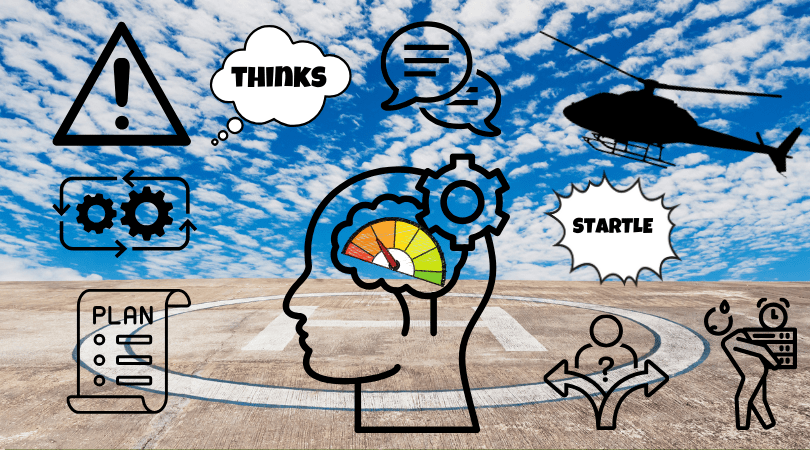
Cognitive workload is an important variable with which to understand pilot performance, particularly when under pressure, but measuring it is notoriously difficult. A recent study by Brazilian test pilots and academics investigated new methods of measuring it during helicopter emergencies. In a world in which we are adding advanced cockpit systems at an ever increasing pace a better understanding of how and when pilots are impacted by cognitive capacity will allow us to design better for management and mitigation of workload breakdowns in critical flight scenarios.
Military vs Civil: Does training background affect safety in helicopter pilots?

Which system produces the better pilot – military or civil? Does it matter? According to a recent study of helicopter pilots from the University of Aberdeen with the title “Does training background affect safety in helicopter pilots?” (Kaminska et al., 2023), maybe we are right to be asking these questions. The answers suggest that we need to pay more attention to how the military-civil divide impacts CRM behaviours amongst mixed crews. What do the cultural differences embedded in the different ways these pilots have been trained mean to competency, operational effectiveness, and – ultimately – safety?
A Bad Week
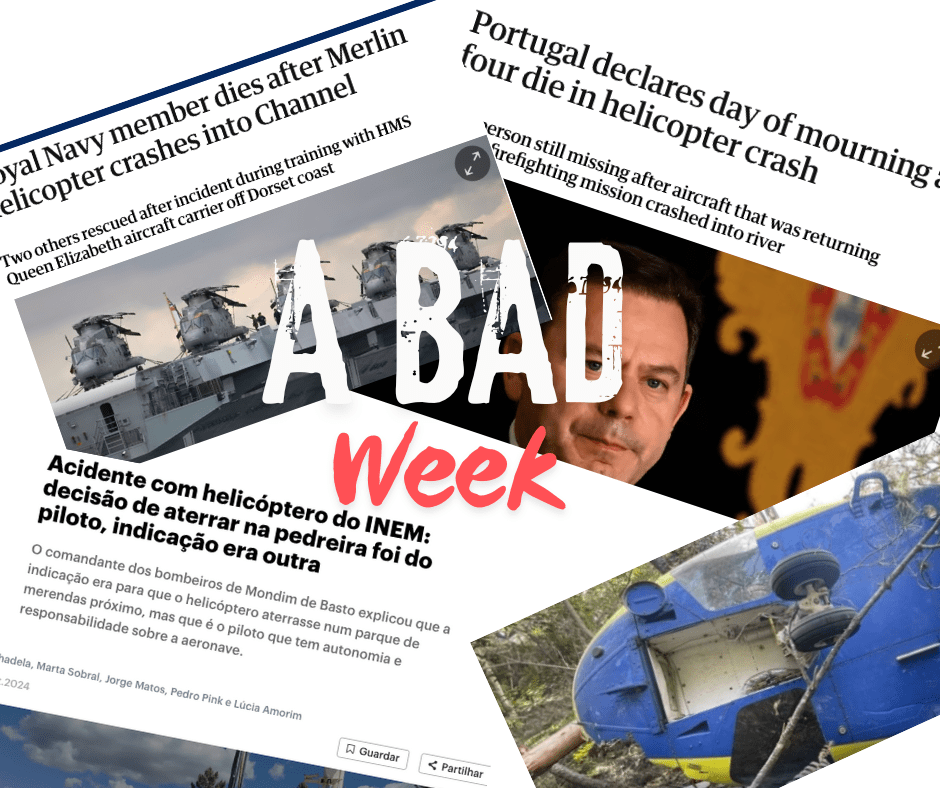
It’s been a been a tough week for helicopter aviation. In Western Europe, three accidents in six days. Six lives lost. More seriously injured. In the rest of the world, another five accidents and over twenty lives. In six days. So many accidents in such a short period of time delivers a strong reminder to us about the kind of tasks that we as a society ask of our helicopters and their crews: They are often difficult, and sometimes dangerous, even for the very best of them.
A very normal accident
It was early evening on the 24th September 2022 when an offshore AW139 helicopter inbound to Houma-Terrebonne Airport in Louisiana, USA, declared a mayday. A lot had already happened in the cockpit by the time the co-pilot hit the press to transmit…
We take a look at Normal Accident theory in the light of a recent accident: Technology is both a risk control and a hazard itself. The act of adding technology is at best risk neutral. Continually adding more technology in the belief that we are adding more layers of defence in a system is flawed because we are in fact adding more combinations of possible failure modes. In other words, there is a direct trade- off between increasing safety by adding in more controls, and decreasing safety by adding complexity.
Helicopter human factors in focus
“For no other vehicle is the need for human factors research more critical, or more difficult.” Sandra G. Hart.
That’s a bold assertion that I had never heard anyone make before and consequently had never given much consideration to whether or not it might be the case. So let’s unpack that proposition a little by looking at the arguments that the author offers to back it up…
The need for speed? How slowness has a value all of its own.

Human exploits in aviation have always been closely linked to our fascination for speed. We admire speed in its many guises and it remains a marker of achievement in almost any field you care to think of. In aviation, just as in many other walks of life, we often assume the faster the better. We associate speed with competence. But what if we could disassociate the idea of slowness with incompetence? What if instructors were made to teach the opposite? What if we came to associate a slow response with higher skill levels and greater professionalism?
Developing resilience to startle and surprise in helicopter operations
Also published in AirMed&Rescue April 2022 edition. https://www.airmedandrescue.com/latest/long-read/developing-resilience-helicopter-operations
What should startle and surprise training mean in an applied sense and how should we be approaching it? Do the differences between airline transport flight profiles and helicopter operations mean that we should be looking critically at how to approach the startle and surprise from a rotary wing perspective? Is it as significant a hazard in the low level, high workload, high obstacle environment in which helicopter crews spend much of their time?
The automation explosion: examining the human factor fallout
Also published in AirMed&Rescue, Nov 2021 edition.
Automation reduces workload, frees attentional resources to focus on other tasks, and is capable of flying the aircraft more accurately than any of us. It is simultaneously a terrible master that exposes many human limitations and appeals to many human weaknesses. As we have bid to reduce crew workload across many different tasks and increase situational awareness with tools including GPS navigation on moving maps, synthetic terrain displays, and ground proximity warning systems, we have also opened a Pandora’s Box of human factors to bring us back down to the ground with a bump. Sometimes literally.
Helicopter Hoisting and the Human in the system:
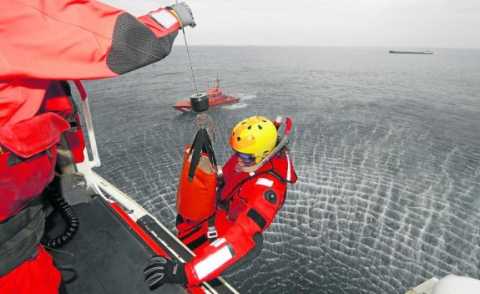
Applying the 3Hs to decision-making during helicopter hoist operations. On the 29 April 2020 at Biscarosse near Bordeaux in France, two crew members of a French Air Force H225 fell to their deaths when a hoist cable parted during a winch training exercise. (Summary report in English from Aerossurance.) The tragic outcome coupled with theContinueContinue reading “Helicopter Hoisting and the Human in the system:”
Developing Competency in Problem-Solving and Decision Making: The importance of Process vs Outcome.
Separating the quality of a decision from the quality of the processes which lead to a decision being made sounds like it should be straight-forward, but it isn’t. This is especially true if we judge a decision to be a bad one, or a wrong one, when our negative perception of the choice can easily overwhelm what could have been a perfectly acceptable, collaborative, and well-communicated thought process.
The distinction between the quality of the decision-making process and the decision itself is an important one to make in the context of training for competency because although we won’t always make the right, or the best, decisions in any given situation, the ability to develop and improve our decision-making processes, is what competency-based training is all about.
Flying SAR in the sunshine: What’s not to like?!
From the Atlantic to the Mediterranean: The Weather. Learning to adjust. And just learning. On moving to Valencia last year to try my hand at flying a Search and Rescue helicopter in Spain, the predominantly anti-cyclonic picture of Spain’s Mediterranean-facing east coast presented an entirely new meteorological situation to me. “SAR in the sunshine, what’sContinueContinue reading “Flying SAR in the sunshine: What’s not to like?!”
Sting in the tail: keeping the back end at the front of your mind.
Following the accident at Leicester City Football Club at the end of last month, all of which was caught on camera, and replayed very publicly, tail rotor failures are back in focus, and for those of us who fly the machines, are very much at the forefront of our minds. It was following a similarContinueContinue reading “Sting in the tail: keeping the back end at the front of your mind.”
“PF & CM:” Pilot Flying & Crewman Monitoring
Training Monitoring for Helicopter Technical Crew (Part 2) The response to my last post underlined how little technical or non-technical material out there is written with the niche skill-set of the helicopter technical crew community in mind. There is certainly an interest and appetite for its consumption among those who play a part in thisContinueContinue reading ““PF & CM:” Pilot Flying & Crewman Monitoring”
 competentaviators.com