
Can creative thinking help to mitigate the effects of operational unpredictability? Helicopter operations involve a high degree of unpredictability. A survey of helicopter crew has showed that a high proportion recognise the role that creativity plays in successfully managing uncertainty in flight operations.
Category Archives: 2024
Getting the right amount of stimulation from your simulation: What role does fidelity have in training to fly?

Full flight simulators are amazing tools for learning. Training devices have become more sophisticated, more true to the environment they recreate and, with this innovation, more expensive to use as well. But have these advances made them more effective as training tools in parallel, or is there a limit to the benefits of ever-increasing realism to the learning environment? This article aims to explain two of the key concepts in using simulated environments for training, fidelity and transfer of training, and invites you to consider the pros and cons of your own experiences of teaching and learning in the simulator.
How do you know when cognitive workload is affecting your performance?

Cognitive workload is an important variable with which to understand pilot performance, particularly when under pressure, but measuring it is notoriously difficult. A recent study by Brazilian test pilots and academics investigated new methods of measuring it during helicopter emergencies. In a world in which we are adding advanced cockpit systems at an ever increasing pace a better understanding of how and when pilots are impacted by cognitive capacity will allow us to design better for management and mitigation of workload breakdowns in critical flight scenarios.
Military vs Civil: Does training background affect safety in helicopter pilots?

Which system produces the better pilot – military or civil? Does it matter? According to a recent study of helicopter pilots from the University of Aberdeen with the title “Does training background affect safety in helicopter pilots?” (Kaminska et al., 2023), maybe we are right to be asking these questions. The answers suggest that we need to pay more attention to how the military-civil divide impacts CRM behaviours amongst mixed crews. What do the cultural differences embedded in the different ways these pilots have been trained mean to competency, operational effectiveness, and – ultimately – safety?
A Bad Week
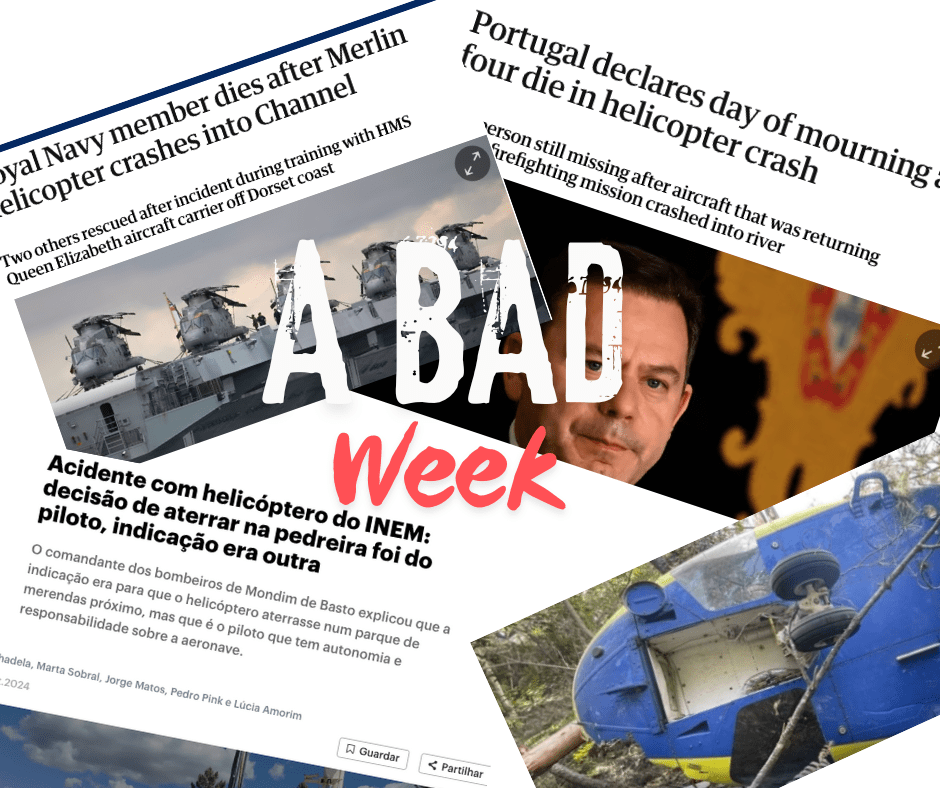
It’s been a been a tough week for helicopter aviation. In Western Europe, three accidents in six days. Six lives lost. More seriously injured. In the rest of the world, another five accidents and over twenty lives. In six days. So many accidents in such a short period of time delivers a strong reminder to us about the kind of tasks that we as a society ask of our helicopters and their crews: They are often difficult, and sometimes dangerous, even for the very best of them.
On helicopters, elephants, and training.

This is the elephant in the room that has been stubbornly refusing to move: very little has changed in how we train helicopter pilots for four decades or more. In the meantime much else has changed, but collectively we are unwilling – or unable – to make significant changes to what the training and checking system prescribes. Why is this? And what should we do about it?
Sting in the tail: keeping the back end in the front of your mind.

It’s hard to believe that the AW169 tail rotor failure over Leicester City Football Club happened over five years ago. Following the accident in 2018 I was asked by my Head of Training at the time to focus some training for crews on tail rotor malfunctions which led me to CAA Paper 2003/1 Helicopter TailContinueContinue reading “Sting in the tail: keeping the back end in the front of your mind.”
Navigating cross-cultural turbulence: Why the multi-national complexion of aviation demands we should all add culture to our competencies.

Just mentioning the word culture seems often to be met with a glazing over of eyes. I learned that discussing ‘cultural capability’ in the military was unfashionable, uncool, and frankly unmilitary. I have a sense that the same is true in the world of aviation, which is ironic given the uniquely international nature of the industry…
 competentaviators.com